
WILPF has exposed and stigmatised the use of chemical and biological weapons for many decades. In recent years, RCW has covered international meetings on these types of weapons, including the Biological Weapons Convention, the Chemical Weapons Convention, and the UN First Committee on Disarmament and International Security.
Overview
Conference Reporting
Reaching Critical Will has monitored and provided reporting and analysis on biological weapons from different meetings of the Biological Weapons Convention, including for:
Reaching Critical Will also provided coverage on biological and chemical weapons in these forums:
UN General Assembly First Committee on Disarmament and International Security
Publications
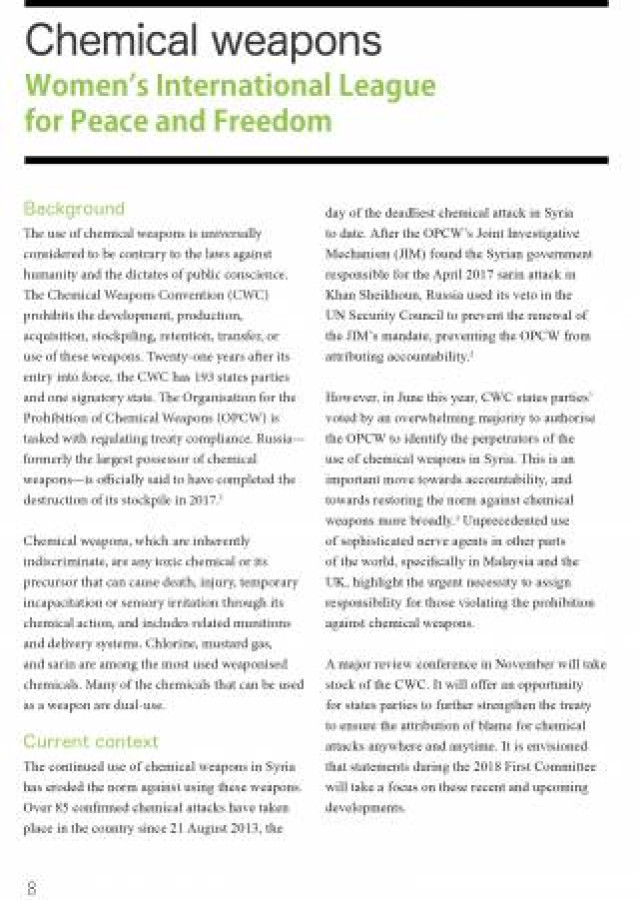
Fact Sheets


What you can do




Latest News on Biological and chemical weapons
@2021- Reaching Critical Will - Women's International League for Peace and Freedom - Website Maintained by Tetra Information Services Pvt. Ltd.