Overview
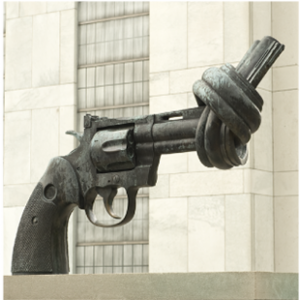
First Committee of the UN General Assembly
The United Nations General Assembly is consensus-building body, where issues of international peace and security are collectively discussed among all UN member states. Its regular session convenes in September of each year, and after two weeks of General Debate, it breaks up into six specialized committees. READ MORE
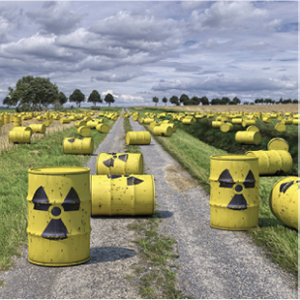
Nuclear Non-Proliferation Treaty
The nuclear Non-Proliferation Treaty (NPT), which contains the only binding commitment to nuclear disarmament in a multilateral treaty, became international law in 1970. At the time, there were five nuclear weapon states: China, France, the United Kingdom, the United States, and the USSR. READ MORE
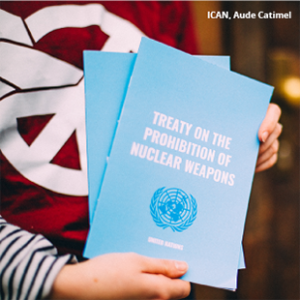
Treaty on the Prohibition of Nuclear Weapons
The Treaty on the Prohibition of Nuclear Weapons (TPNW) was negotiated at the United Nations in New York in March, June, and July 2017, with the participation of more than 135 countries, the International Committee of the Red Cross, and members of civil society. On 7 July 2017, 122 states voted in favour of the Treaty’s adoption. READ MORE
Arms Trade Treaty
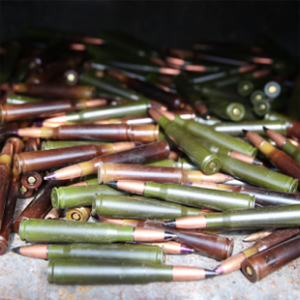
Since the early 1990s, an active civil society campaign has been promoting the negotiation of a robust, comprehensive, legally-binding treaty to establish standards and restrictions on the international trade in conventional arms. After a seven year process at the United Nations, the treaty text was adopted by the UN General Assembly on 2 April 2013. READ MORE
Convention on Certain Conventional Weapons
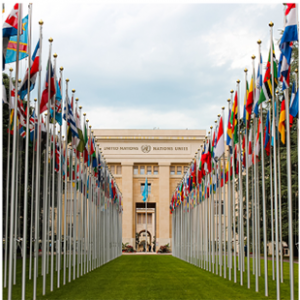
The Convention on Prohibitions or Restrictions on the Use of Certain Conventional Weapons Which May be Deemed to be Excessively Injurious or to Have Indiscriminate Effects (CCW) was adopted in 1980. Meetings of its states parties take place on the Convention's protocols and on specific issues states decide to take up. READ MORE
Explosive Weapons Meetings
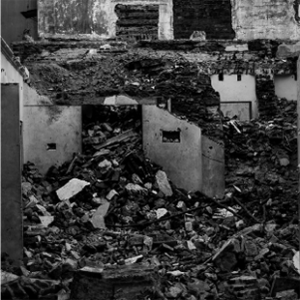
The use of explosive weapons (e.g. mortars, rockets, artillery shells, aircraft bombs, improvised explosive devices) in populated areas inevitably leads to the disproportionate death and injury of civilians and destruction to civilian infrastructure. Reaching Critical Will represents WILPF on the steering group of the International Network on Explosive Weapons (INEW). READ MORE
Autonomous Weapons Meetings
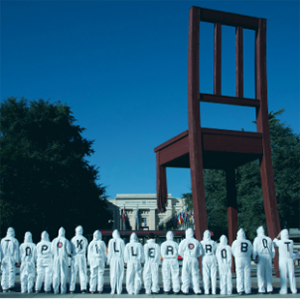
Since 2014, states parties of the CCW have discussed how to address the threat of autonomous weapon systems in working groups. In 2016, the Fifth Review Conference of CCW decided to begin a formal process on this in 2017, establishing the Group of Governmental Experts (GGE) on what it calls Lethal Autonomous Weapon Systems (LAWS). READ MORE

Cyber Peace and Security Meetings- CPSM
Information and communication technologies, or ICTs, have been on the UN agenda since 1998 in the context of the need for "information security", a term often used interchangeably with "cyber security". READ MORE
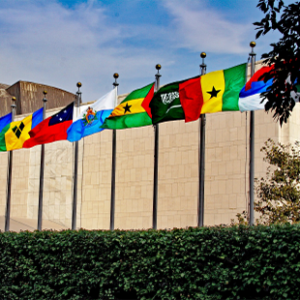
UN General Assembly
Each year during the UN General Assembly's high-level general debate in September, Reaching Critical Will extracts all references to disarmament and arms control. This Disarmament Index is available for the years below: WILPF's PeaceWomen project posts all references to gender and women. READ MORE
International Days
International days are observed by the United Nations as occasions to mark particular events or topics in order to promote, through awareness and action, the objectives of the United Nations. Usually, it is one or more member states that propose these observances and the General Assembly establishes them with a resolution. READ MORE

UN Programme of Action on Small Arms and Light Weapons
The UN Programme of Action provides the framework for activities to counter the illicit trade in small arms and light weapons. It was adopted by all UN member states in 2001. Since that time the UN has worked to support the implementation of the UNPoA at national, regional, and international levels. READ MORE

Conference Reporting Archive - CRA
The conference reporting archive collects reports from different disarmament fora that RCW has reported on in the past, including the CTBT, the Conference on Disarmament, the Convention on Cluster Munitions, and much more. READ MORE