Reaching Critical Will monitors and provides reporting and analysis on cyber-related forums, including:


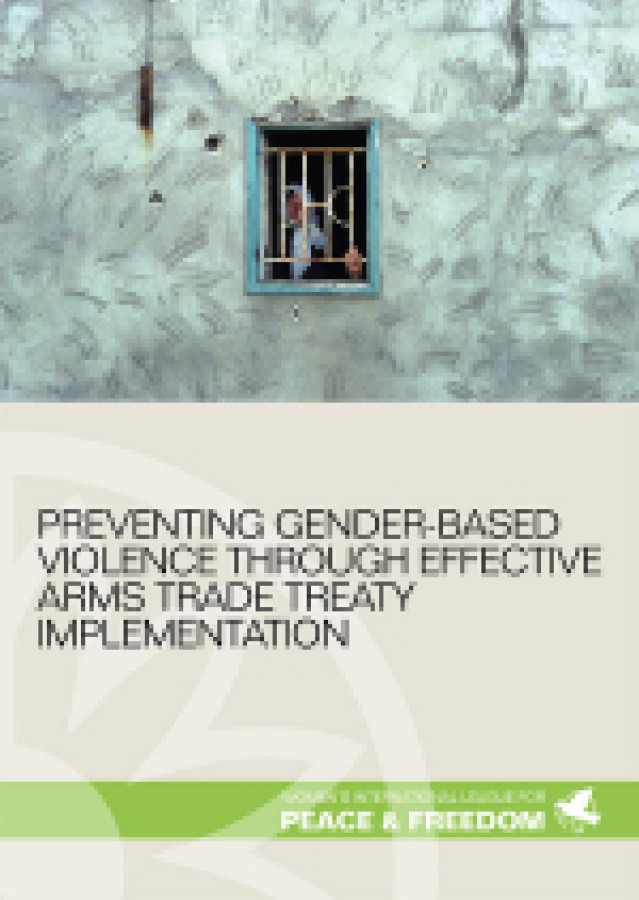

Submission to the Office of the High Commissioner for Human Rights for the report on civilian acquisition, possession and use of firearms by children and youth
19 October 2021
The impact of Canada’s arms transfers on children’s rights: submission to the 87th pre-session working group of the Committee on the Rights of the Child
01 June 2020
Submission to the UN Office of the High Commissioner of Human Rights on the impact of the diversion of arms and unregulated or illicit arms transfers on the human rights of women and girls
01 April 2020
Allison Pytlak and Farida Nabourema, “#Bulletproofinclusion: Mobilising for women's leadership in small arms control,” WILPF and...
25 July 2021
Allison Pytlak, Presentation to session on “Taking stock of action on the illicit arms trade: gender responsive small arms...
20 June 2020
Ray Acheson, "COVID-19: The Risks of Relying on Technology to 'Save Us' From the Coronavirus," Women's International League for...
15 April 2020
WILPF Statements - Small Arms and Light W - Try
WILPF statement on Yemen to the 42nd Human Rights Council session
Civil society statement on gender to 2018 First Committee
WILPF statement on Libya to the 39th Human Rights Council session
WILPF Statement to the Human Rights Council: Human rights must come before profits from the arms trade
WILPF Statement on the oral update of the Commission of Inquiry on Syria,
WILPF, WILPF Statement to the Human Rights Council on the need for continued scrutiny of the gendered impacts of arms proliferation
WILPF, WILPF Statement on the USA's arms transfers to countries where child soldiers are used
Joint statement on gender and disarmament to the UN General Assembly First Committee
Statement to the Conference on Disarmament on International Women's Day 2003


Activism






Learn more at the Stockholm International Peace Research Institute (SIPRI) and the International Action Network on Small Arms (IANSA)