2016 No. 3

Editorial: First Committee fairy tales and a measure of reason
2016 No. 2
Editorial: On the pursuit of power through violence, and those who confront this
2016 No. 1 | Preview
Editorial: Against all odds
2018 No. 6
Editorial: Standing firm for the rules of law and humanitarian disarmament
Today marks 100 years since the armistice of the First World War. A devastating conflict that, as the Women’s International League for Peace and Freedom (WILPF) said in 1915, marked a “reckless sacrifice of human life and the destruction of so much that humanity has laboured through centuries to build up.” Since then, the world has seen many wars and much more bloodshed, and many, many more weapons.
More than a hundred years ago the women of WILPF articulated a plan for disarmament, the development of international institutions, and women’s enfranchisement, among other things, as a path for the prevention of war. Much of this project has been taken up by governments, and yet we are today faced with growing military expenditure, the dominance of foreign policy by the arms industry, and global inequalities amongst people and states. The UN’s work on disarmament, after a trying five-week session of First Committee, seems fraught at best and headed towards a downward spiral at worst. The international system to regulate or control weapons and war appears to be being actively dismantled by the very states that created it.
The arms control and disarmament agreements put in place over the last century are at risk. It’s not just about the United States announcing its intention to withdraw from the Intermediate-range Nuclear Forces Treaty, or deciding to walk away from the Joint Comprehensive Plan of Action with Iran. The rot goes further. The nuclear Non-Proliferation Treaty continues to face a crisis of credibility with the nuclear-armed states still refusing to eliminate their nuclear arsenals nearly fifty years after the Treaty’s entry into force. The Chemical Weapons Convention is under strain as these abhorrent weapons are used in Syria and other locations while states parties to the Convention remain at odds over how to deal with ongoing impunity. Meanwhile, attempts to prevent the weaponisation of autonomous technologies and artificial intelligence, as well as of cyber space and outer space, are stymied by the most military advanced countries. These countries appear to seek dominance in all possible realms of warfare, regardless of the catastrophic impact this has on human life, rights, and dignity, the environment, and international security.
On the final day of the Committee’s work, the Egyptian delegation noted in frustration that we seem to be going in circles on several disarmament issues. Speaking to the fight between the United States and Russia over their competing cyber resolutions, Egypt noted that progress for achieving a reliable regime establishing agreed rules and norms on this issue has been stalled for more than a decade. Five groups of governmental experts have been convened and some have put forward valuable recommendations, yet efforts are not being made to utilise them to create binding rules. This is similar to the situation on autonomous weapons, where multiple meetings have been convened over years to discuss the best ways forward, and yet the most that those governments driven by militarism are willing to commit to is more talks. As the UN Secretary-General said last week in Lisbon, “machines that have the power and the discretion to take human lives are politically unacceptable, are morally repugnant, and should be banned by international law.” The majority of countries are ready to negotiate a new instrument, yet the road is currently blocked by a handful of countries that are, as WILPF warned, accruing private profits from the development of armaments.
Yet in listening to the delegations whose positions are invested in militarism, one might think the rest of the world is tragically hindering them from bringing us all the much-vaunted ideal of “international strategic stability”. This round of First Committee was a masterclass in victim blaming, gaslighting, and power politics, as governments possessing weapons of mass destruction engaged each other in diplomatic (or not so diplomatic) combat. Accusations, assertions, and demands amongst these countries replaced dialogue and negotiation in Conference Room 4. The only thing they came together on was their disdain for any attempts by the rest of the international community to try to sustain a rules based international order in which the use of force and the development and trade in weapons are regulated, controlled, prohibited, or abolished.
So what can the rest of the so-called international community do amidst all of this? We can return to the call of WILPF from 1915. We can return to the UN Charter. We can set out to do what those ensnarled in the profits and pains of militarism refuse to do. We can build an international order that provides security for all. We can pursue disarmament, by creating or rebuilding or maintaining institutions, laws, and norms against weapons of mass destruction and other indiscriminate weapons that cause humanitarian harm; against the increasing automation of violence through killer robots and drones; against conflict, repression, and violence in cyber space and outer space; against the use of explosive weapons in populate areas; against the rampant war profiteering from arms trading and illicit trafficking.
Disarmament is a crucial part of the path to preventing war. WILPF knew it in 1915 and we know it now. We have seen enough bloodshed. We know where weapons take us. We need instead to bolster the norms, tools, and techniques of peace and nonviolence. And we need to work together. As a handful of countries seek to dominate and destroy, it’s up to the rest of us to build something new. “As 21st-century challenges threaten to outpace 20th-century institutions and mindsets,” said UN Secretary-General António Guterres at the Security Council on Friday, “let us reaffirm the ideals of collective action while pursuing a new generation of approaches and architecture capable of responding.”
2018 No. 5
Editorial: The myth of the middle
If one had to pick a single word to describe this year’s First Committee, contentious would be a reasonable contender. The increased volume—in all senses of the word—of accusations and denials has descended as close to name calling as diplomatic forums get. Amidst all this tension, it’s no surprise that appeals for a “middle ground” are also on repeat. It sounds rational: so many cracks and fissures have begun to split wide open, and a number of delegations are keen to “build bridges”. But this impulse for the middle is misguided and dangerous.
“What is halfway between moral and immoral?” author Tayari Jones asks in a recent article about US politics. Looking at historical events, she suggests the middle ground on slavery would be indentured servitude; the middle ground on interning Japanese-Americans during World War Two would perhaps have been to return their property after they were released.
What is the middle ground on nuclear weapons? What is in between those who categorically reject the bomb and those who say it is instrumental to (their) security and for maintaining “stability” in the world?
Those calling for a middle ground are mostly those who do not possess nuclear weapons themselves but include them in their security doctrines. Perhaps for these governments, this is the middle ground. In which case, should all non-nuclear-armed states buddy up with a nuclear-armed overlord for protection? This doesn’t seem to be what these governments mean when they call for middle ground. They don’t advocate for other countries to introduce nuclear weapons into their security doctrines. So what are they calling for?
They call for more transparency, and yet some of them are not transparent about hosting nuclear weapons on their territories. They call for a treaty to stop the production of fissile materials for nuclear weapons, but refuse to promote a version of this treaty that could have an impact on existing stockpiles. They say the Comprehensive Nuclear-Test-Ban Treaty (CTBT) must enter into force, yet they won’t join the Treaty on the Prohibition of Nuclear Weapons (TPNW), which includes a ban on testing.
The steps they suggest are not really the middle ground. They are steps that allow the nuclear-armed states to maintain their arsenals, and even to modernise them. They are steps that entrench the status quo rather than challenge it.
The middle ground as described by these countries is one that tries to completely accommodate the interests of nuclear-armed states. Much like the “bros” who enable rape culture by laughing at sexist jokes or stories of sexual assault, or by warning survivors of sexual violence against reporting these crimes, these governments enable the nuclear-armed states to remain nuclear-armed states. Calling for a middle ground on nuclear disarmament enables the continued possession, and thus the use and threat of use, of these weapons of mass destruction.
As we enter a world now in which the US is tearing up arms control agreements, such as the Joint Comprehensive Plan of Action (JCPOA) with Iran, or the Intermediate-range Nuclear Forces (INF) Treaty with Russia, what are those advocating a middle ground saying? In First Committee and beyond, some of them have expressed concern. Some have called for respect of international law. Some have tried to articulate, in the case of the JCPOA, how they will maintain the deal regardless of the US government’s position. Yet at the same time, these middle-ground governments continue to reject the TPNW. They say that those who outlawed nuclear weapons are being “divisive”. They still ask countries that have completely rejected nuclear weapons to “compromise”.
Diplomacy and negotiation are of course largely based on compromise. It’s rare that everyone gets what they want in situations of polarisation. But what are nuclear-supportive governments saying when they ask those who have prohibited nuclear weapons to compromise?
This obsession with the middle ground is what led Japan to destroy its annual resolution, United action with renewed determination towards the total elimination of nuclear weapons. Not that this resolution was previously a masterpiece of progressive action for nuclear disarmament, but what Japan has accomplished through its remodeling of this text over the past two years is to trash hard-won, long-held commitments and agreements. Perhaps the most egregious in a litany of problems, this resolution has rewritten the unequivocal undertaking of the nuclear-armed states to totally eliminate their nuclear weapons. They made this promise at the 2000 Non-Proliferation Treaty (NPT) Review Conference, and it has been a touchstone for measuring their efforts for nuclear disarmament since then.
And what does Japan get for its efforts? Votes on thirteen separate paragraphs, a boatload of abstentions and explanations of vote expressing concern with this text, and not even the support of the United States. As was reported by the Japanese press in 2017, the government watered down the resolution under diplomatic pressure from the United States. Now, even this mangled interpretation of NPT commitments is too strong for the current US government.
In an explanation of vote on this year’s draft, the US ambassador said that while Japan’s resolution “remains the most realistic and practical of the nuclear disarmament resolutions,” it is also a “step back from the baseline set in 2017 in some important ways,” including a return to language that dates from a different time and a different security environment than we currently face. He emphasised that to make progress we need to look forward, not backwards—we must not fixate on historical language that is out of date and out of step with the current prevailing security environment.
This is an incredible statement, the importance of which should not be underestimated in the context of the forthcoming NPT review conference and US commitments—rhetorical or otherwise—to nuclear disarmament. It can be read as a signal that the US no longer accepts the agreed outcomes from the 2000 or 2010 NPT review conferences. By describing language from those consensus-based outcomes as backwards and out of step, it seems the United States is saying it will not agree to this again in 2020—let alone any steps or measures that could help achieve nuclear disarmament.
It would seem, then, that Japan’s attempt at “bridge building” has actually enabled the US to justify its walk back from decades’ worth of multilateral and bilateral agreements.
That’s the thing about the middle ground. Rewriting documents to suit the interests of the nuclear-armed states is not building a bridge—it’s burning existing bridges down.
This isn’t just about the United States, of course. Russia’s delegation, in an explanation of vote on the resolution related to the CTBT, criticised comments from the US government that may signal a resumption of explosive nuclear testing. In this context, the Russians seemed to be asking what the relevance of the CTBT would be if this happened. And, while these long-held instruments are under threat, the nuclear-armed states continue to categorically reject the newest one. Almost all of the nuclear-armed states have at one point or another during this First Committee leveled their “consistent objections” against the TPNW, emphasising that the Treaty does not bind them and will not constitute customary international law. France went even further, saying that the “emotional and divisive” approach to nuclear disarmament (note the gendered, patriarchal language) represented by the TPNW is disconnected from credible work. It said the Treaty is aimed a “discrediting deterrence,” which it argues will undermine international security.
The Treaty is aimed at discrediting deterrence. That is indeed one of its objectives. But the states supporting the TPNW do not see this as undermining international security. They see it as essential to enhancing security. Deterrence is the theory that justifies the continued possession, modernisation, deployment, and possible use of nuclear weapons. Challenging deterrence theory is critical to the project of nuclear abolition—take away the justification for nuclear weapons, and take away one of the key pillars sustaining their continued existence.
But it’s not the only piece of the puzzle that needs addressing. As scholar Jonathan Hunt writes, the continued exaltation of nuclear weapons is not just about deterrence but is about the “culture and conceptions of power tied to understandings of national security.” Nuclear weapons “are the ultimate guarantors” of primary and privilege. He argues that nuclear arms control will remain under threat until we change how we think and talk about national security.
This is another of the main objectives of the TPNW, and the process of considering the humanitarian impacts of nuclear weapons that led to it. The Treaty mounts a challenge to the idea that nuclear weapons afford national security. It also mounts a challenge to the notion that arms control, as reflected by the step-by-step approach to nuclear disarmament endorsed by the middle-grounders, is sufficient to deal with the problem of nuclear weapons. There are “inherent contradictions in the project of arms control as a way to control the threat of nuclear war,” physicist Zia Mian argued recently. The US government is using arms control as a way to justify nuclear build-up, saying it wants to have something with which to bargain. Historically, arms control “was designed to preserve a nuclear striking power.” Thus this project of managing nuclear weapons through piecemeal arms control and non-proliferation initiatives has led us to where we are today, and to where those calling for a “middle ground” seem to want to keep us.
In this context, why should nuclear abolitionists compromise? Where would we be without a strong majority calling for the total elimination of nuclear weapons and taking concrete actions to promote this, including by outlawing nuclear weapons, discrediting deterrence, and divesting from the production of weapons of terror? Does compromising on any of these steps make the world safer? Lead us closer toward a world free of nuclear weapons, which is the stated goal even of the step-by-step approach demanded by those seeking a “middle ground”?
The world has changed, and we are operating in a different international security environment. This much is true. But this understanding does not mean that those rejecting nuclear weapons need to compromise. As Mian writes, “Accepting the need to face the world as it is and the logic of changed circumstances leads in another direction, one that does not involve accepting the dominance and impunity of nuclear states and the continued existence of nuclear weapons.” This is the path those governments supporting the TPNW have taken, and it is the path that will lead to positive change, even over the objections of the nuclear-armed states.
Appeasing the nuclear-armed is not the answer. They objected to the development of the NPT, calling it “potentially dangerous,” just as they object now to the TPNW. They will always resist limitations on their power and privilege. Protecting them will not make the world safer, it will only get you burned. Standing up for what is right—morally, legally, politically, and in terms of security, human, collective, global security—is what will make the world safer.
“Compromise is not valuable in its own right,” notes Tayari Jones. “And justice seldom dwells in the middle.”
2018 No. 4
Editorial: Resign or revolt—a choice for First Committee delegates
2018 No. 3
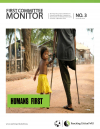
Editorial: Humanitarian disarmament is here to stay
2018 No. 2
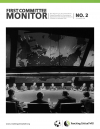
Editorial: Security and the human condition
15 October 2018
“Human civilization is stuck in reverse gear,” said the ambassador of Zambia to First Committee. “While we have made quantum leaps in the development of the science and technology of weapons and the art of killing, we have been moving steadily, inexorably, in reverse in the development of the things that should edify us, as human beings.”
In one of the most poignant statements to ever be delivered in this forum, Ambassador Kapambwe lamented our collective failure to protest the proliferation and use of weapons, the killing of other human beings, and the deliberate prioritisation of profits over people and peace.
This is indeed the crux of the problem. There are protests—sometimes represented by a few tenacious human rights defenders or environmental activists, sometimes seen in hundreds of thousands of people hitting the streets to demand social change. There is also concerted action by campaigners and advocates here at the United Nations, which has resulted in prohibitions of certain weapons, limitations on the arms trade, and condemnation of certain practices, especially those that harm civilians.
Yet billions of dollars are poured into the modernisation of nuclear weapons. Research and development of weapons that operate with decreasing human control, from drones and robots to the weaponisation of artificial intelligence and cyber tech, is on the rise. The arms trade continues to devastate communities and lives around, resulting in gun violence inside and outside of conflict, and the destruction of towns and cities through the use of explosive weapons in populated areas.
Our protests are necessary but have not been sufficient to curtail the harm to people and the environment caused by weapons and war. In part, this is because of the approach to security that many governments take. They have adopted and reinforced through their spending and their posturing that more weapons equals more security. This is a patriarchal approach to security, in which violence is strength and killing is power.
It is this approach that causes countries armed to the teeth with nuclear and conventional weapons to cry that “security challenges cause states to rely on” their weapons to protect them, as the US delegation did last week. This framing highlights the problem described by the Zambian ambassador—it is based on a conception of security that is about the security of the weapons industry and the state government rather than its own or any other population. The money poured into the development and maintenance of these weapons, the damage caused by their use, and the risks they pose for our survival, all undermines the security of human beings. But it’s great for those making profits or maintaining their privileged positions of power.
There is also, of course, an incredibly hypocritical double standard in this argument. While the United States, France, and others say that the “security environment” causes them to maintain their nuclear arsenal for “deterrence,” would they accept this argument from other countries? They certainly have not accepted it from the Islamic Republic of Iran or the Democratic People’s Republic of Korea.
Putting aside the sheer ridiculous victim-blaming perpetuated by nuclear-armed states saying the world is “forcing” them to retain their nuclear weapons even while the vast majority of other states have rejected the bomb and codified this rejection through the UN Treaty on the Prohibition of Nuclear Weapons, the argument clearly shows the divergence in perspectives in play at First Committee.
One view of security, articulated by the nuclear-armed states and many of their allies, is that disarmament is something that will weaken their security—i.e. it will weaken their privileged position of weaponised power. The other is that disarmament will strengthen security—i.e. the security of states that don’t use force to get their way in international affairs, as well as the security of people and the environment.
This wildly different worldview is at the heart of the challenge at First Committee. Only one of these perspectives will lead to peace through disarmament and dialogue. The other will lead us further down the path of violence, aggression, and despair. But it does not have to be this way. As the Zambian ambassador said, “War is neither a human condition nor imperative. We can change things.”
2018 No. 1 | Preview
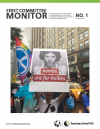
Editorial: Disarming the Patriarchy
Countless women and other survivors of sexual violence watched in fury as the misogynist, patriarchal rage of a powerful straight white man whose entitlement was questioned live on television the final week of September. The nomination of Brett Kavanaugh to the US Supreme Court and subsequent allegations of sexual assault from several women unleashed a renewed dialogue about assault, survivors, and privilege not just in the United States but also around the world. This fight, which has been elevated throughout the #MeToo era, reached a fever pitch as the nominee and his powerful white male allies railed against survivors of violence to ensure that their privileged position of power and dominance would remain in tact.
Some may wonder what any of this has to do with First Committee, with disarmament and international security. Two things come to mind. First of all, weapons are tools of the patriarchy. Secondly, whether the debate is about sexual violence or armed violence, the fight is the same: it’s about changing norms, about what is considered by society as acceptable behaviour.
The patriarchy is a social order dominated by men—in particular, men performing a certain brand of militarised masculinity that associates weapons and war with power. This form of masculinity influences the possession, proliferation, and use of everything from nuclear weapons to small arms. This is a masculinity in which ideas like strength, courage, and protection are equated with violence. It is a masculinity in which the capacity and willingness to use weapons, engage in combat, and kill other human beings is seen as essential to being “a real man”.
This type of violent, militarised masculinity harms everyone. It harms everyone who does not perform that gender norm—women, LGBTQIA-identified people, non-normative men. It requires oppression of those deemed “weaker” on the basis of gender norms. It results in domestic violence. It results in violence against women. It results in violence against gay and trans people. But this kind of masculinity also means violence against other men performing violent masculinities. Men mostly kill each other, inside and outside of conflict. Violent masculinities make male bodies more expendable. Women and children, obnoxiously lumped together in countless UN resolutions and media reports, are more likely be deemed “innocent civilians,” while men are more likely be to be considered militants or combatants. Often, in conflict, civilian men are targeted—or counted in casualty recordings—as militants only because they are men of a certain age.
But militarised masculinity is not just about death. It is also a major impediment to disarmament, peace, and gender equality. It makes disarmament seem weak. It makes peace seem utopian. It makes protection without weapons seem absurd.
It also makes it impossible to achieve gender equality. It keeps men and women in binary boxes based on their biological sex. It maintains a strict hierarchy between these binary boxes, in which men are tough, rational, and violent, while women are weak, irrational, and passive. In this narrative, men are agents; women are victims.
The norm of violent masculinity will continue to cause suffering and reinforce inequalities until we get serious about doing something differently. This is a project of dismantling the patriarchy, which is a big project, but it starts with the language we use here in the UN or in civil society, in our resolutions as well as our policies and practices. It starts with taking on these norms, deconstructing them, and building something better for all of us.
So much of our work for disarmament is about effecting normative change. The UN Treaty on the Prohibition of Nuclear Weapons, for example, is about codifying the unacceptability, immorality, and illegality of nuclear weapons in international law. It challenges dominant narratives that nuclear weapons provide security and destroys the normative values that for years have enabled a handful of governments to risk total annihilation of the entire planet just so they can maintain their privileged position of power.
Sound familiar? To those who have survived abuse, assault, and harassment it sure does. And just as survivors are working to burn down the norms that privilege abusers over their victims, so too are disarmament advocates working to prioritise norms of peace over weaponised power.
Disarmament, as Trinidad and Tobago said at the International Day for the Total Elimination of Nuclear Weapons event on 26 September, is about preventing and ending violence, supporting sustainable development, and upholding the principles of humanity. This is what First Committee delegates should be working towards.
More...
2017 No. 6 | Final Edition
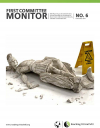
Editorial: The crumbling edifice of hypermilitarised power
2017 No. 4
Editorial: Sanctimony and smokescreens